Baptist — The Bible, the Believer, and the Local Church
May 31, 2026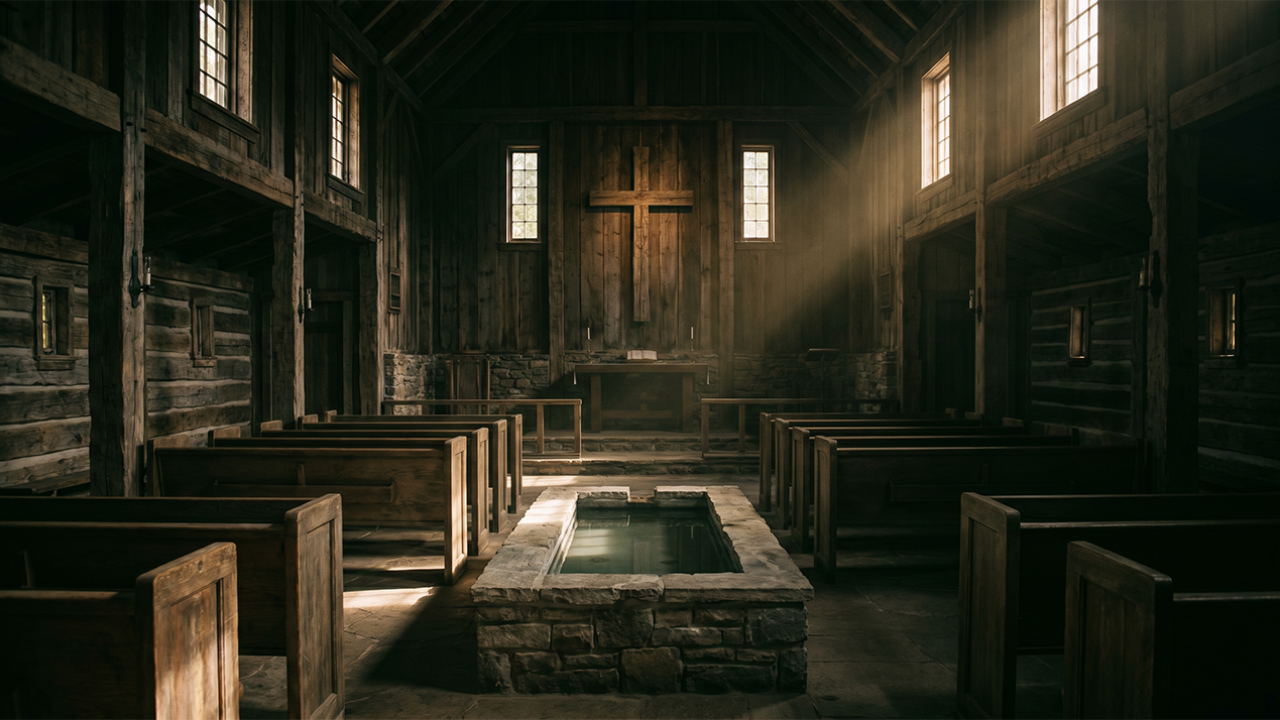
This is article 4 in the Series: Know What You Believe and Why - KNOW YOUR ROOTS: A Plain-Language Guide to the Major Christian Traditions
The Most American Church You've Never Thought About
If you grew up in the American South, there is a reasonable chance you grew up Baptist. Or you knew someone who was. Or you drove past three Baptist churches on the way to your own church. The Southern Baptist Convention is the largest Protestant denomination in the United States — roughly 13 million members, tens of thousands of churches, and a cultural footprint that extends well beyond its membership rolls.
But Baptist identity is not just a Southern thing, and it is not just an American thing. The Baptist tradition has roots in 17th century England, a theology that is sharply defined and internally consistent, and a set of convictions about the Bible, the individual believer, and the local church that have shaped Protestant Christianity far beyond Baptist walls.
If you are a non-denominational evangelical, there is a very good chance your church is functionally Baptist without using the name. Understanding what Baptists actually believe — and why — is understanding a significant portion of the Protestant world.
Where Baptists Came From
The Baptist tradition emerged in the early 1600s among English Separatists — Protestants who believed the Church of England had not gone far enough in its break from Rome. They wanted a church that was fully reformed, fully biblical, and fully free from state control.
The defining issue that gave Baptists their name was baptism. Specifically, the conviction that baptism should only be administered to people who have made a conscious, personal profession of faith — not to infants. This position, called believer's baptism or credobaptism, was not just a preference. It was a theological statement about what the church is and who belongs to it.
In 17th century England, this was a dangerous position. The state church practiced infant baptism. Rebaptizing adults who had been baptized as infants — which is what early Baptists were doing — was illegal. Some were imprisoned. Some were executed. The Baptist commitment to believer's baptism was not a casual preference. It was a conviction men were willing to die for.
The Theological Core
Baptist theology is built on a set of convictions that are tightly interconnected. Pull on one and the others follow.
The Bible is the sole authority. Baptists are among the most consistent practitioners of Sola Scriptura in the Protestant world. Not Scripture plus tradition. Not Scripture as interpreted by a denominational hierarchy. Scripture as the direct, sufficient, and final authority for every individual believer and every local church. This is not just a doctrinal position — it shapes everything about how Baptist churches are structured and governed.
Salvation is personal. No one is born a Christian. No sacrament makes you a Christian. You become a Christian through a personal, conscious act of repentance and faith in Jesus Christ. This is the theological engine behind believer's baptism: if salvation is personal, then the sign of salvation should follow the personal act of faith, not precede it.
The local church is autonomous. Baptist churches do not have bishops. They do not answer to a denominational hierarchy. Each local congregation is self-governing, accountable to Scripture and to its own members. Associations and conventions exist for cooperation, not control. This is a direct application of the Sola Scriptura principle to church government: if Scripture is the final authority, no human institution has the right to govern a local church from the outside.
The priesthood of all believers. Every Christian has direct access to God through Jesus Christ. No priest, no bishop, no institutional intermediary is required. This does not mean there are no pastors or teachers — it means that no human being stands between a believer and God.
Religious liberty. Baptists were among the earliest and most consistent advocates for the separation of church and state in American history. Roger Williams, a Baptist, founded Rhode Island as the first colony with genuine religious freedom. The conviction was theological: faith must be freely chosen to be genuine faith. A state that compels religious practice produces hypocrites, not believers.
What Baptists Get Right
The Baptist instinct toward the authority of Scripture and the primacy of personal faith is sound. The New Testament picture of the church is a community of people who have personally responded to the gospel — not a geographic or ethnic or national community defined by birth and infant baptism. The Baptist tradition has held that line with more consistency than most.
The emphasis on the local church is also worth taking seriously. The New Testament church was local, relational, and accountable. The Baptist model — for all its messiness — preserves something important about what the church is supposed to be. A congregation of people who know each other, hold each other accountable, and govern themselves under Scripture is closer to the New Testament picture than a hierarchical institution governed from a distant center.
Baptist churches have also produced some of the most effective missionary movements in Christian history. William Carey, the father of modern missions, was a Baptist. Lottie Moon, whose name is on the largest missionary offering in the world, was a Baptist. The conviction that every individual needs a personal encounter with the gospel — and that someone needs to go tell them — flows directly from Baptist theology.
Where It Gets Complicated
The autonomy of the local church is a strength and a weakness simultaneously. Without any external accountability structure, Baptist churches can drift in any direction without correction. The Southern Baptist Convention has faced serious, well-documented failures in handling sexual abuse cases — failures that were enabled in part by the decentralized structure that makes accountability difficult to enforce.
Theologically, the Baptist tradition has also produced significant internal disagreement on issues like Calvinism and Arminianism — the debate over whether God sovereignly elects individuals for salvation or whether salvation is genuinely available to all who choose it. This debate runs through Baptist life with real intensity, and it is not resolved.
The Baptist tendency toward individualism can also produce a thin ecclesiology — a weak theology of the church. If salvation is purely personal and the local church is purely voluntary, it is easy to end up with a Christianity that is essentially private, disconnected from community, and resistant to accountability. That is not what the New Testament describes.
Practical Applications
Know what you believe about baptism and why. Believer's baptism versus infant baptism is not a trivial debate. It reflects deep differences in how you understand salvation, the church, and the covenant. You should be able to articulate your position and the reasoning behind it.
Take the local church seriously. The Baptist instinct that the local congregation is the primary expression of the church is worth holding onto. Your faith is not meant to be lived in isolation. It is meant to be lived in a community of people who know you, challenge you, and hold you accountable.
Guard against individualism. The Baptist emphasis on personal faith is correct. The drift toward a purely private, individualistic Christianity is a distortion of it. Faith is personal but never private. The New Testament does not describe solo Christians.
Understand the missionary impulse. The Baptist conviction that every person needs to personally hear and respond to the gospel has produced some of the most effective missionary work in Christian history. That conviction is worth carrying regardless of your denominational home.
The Closing Charge
The Baptist tradition is built on a simple, stubborn conviction: the Bible says what it says, every person must personally respond to it, and no institution — not the state, not a denomination, not a bishop — has the authority to stand between a believer and the Word of God.
That conviction has been costly. It has also been fruitful in ways that are hard to overstate. The Baptist tradition has sent missionaries to every corner of the world, planted churches in places where no church existed, and produced believers who knew what they believed and why they believed it.
That is a tradition worth understanding. Whether you are Baptist or not, the convictions it was built on are worth carrying.
Stop Drifting
You already know what happens if you do nothing.
A year from now,
you’ll either: