
FLDS — Polygamy, Power, and Abuse Dressed in Scripture
Sep 07, 2026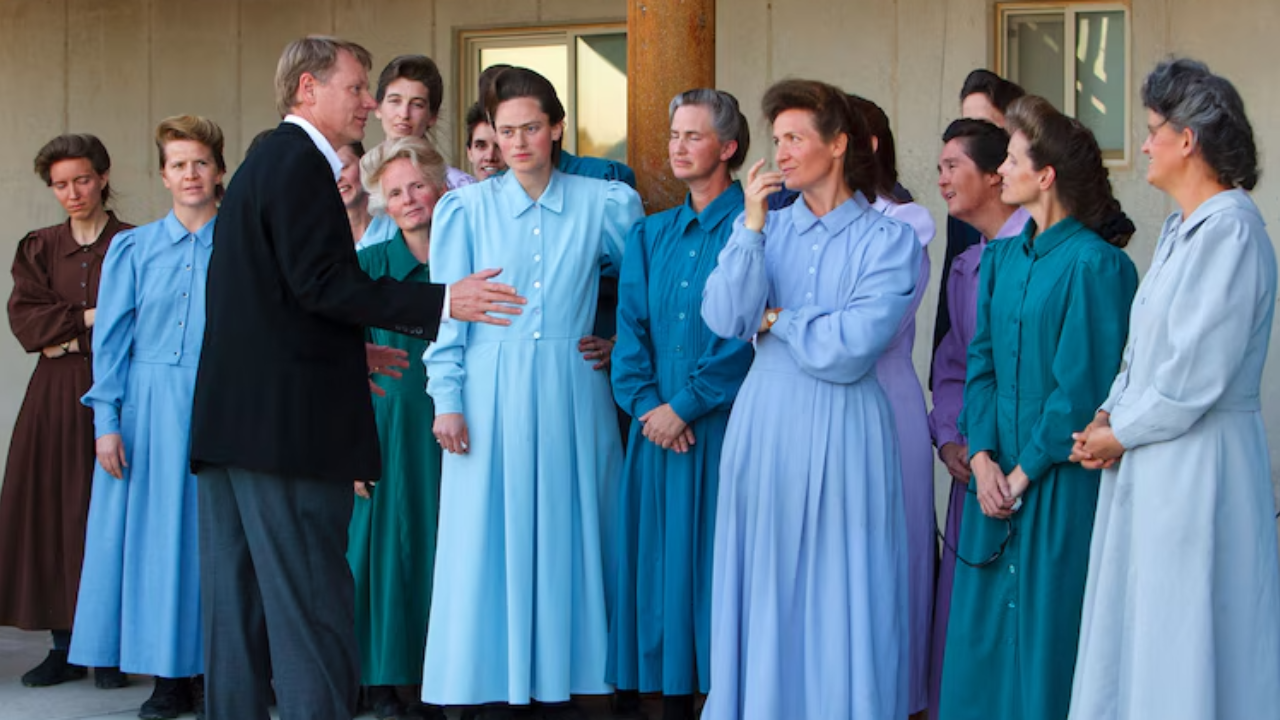
This article is part of the Series: Know What You Believe and Why - Part 2 - A Wolf in Sheep's Clothing
A Warning Before We Start
This article is different from the others in this series. The Jehovah's Witnesses and the LDS Church are organizations with theological errors that need to be named and understood. The Fundamentalist Church of Jesus Christ of Latter-day Saints is something else. It is a criminal enterprise that has used the language of Scripture and the structure of religion to systematically abuse women and children for generations.
I am not going to be balanced about this. There is no balance to be had. What happened — and what continues to happen — in FLDS communities is not a theological disagreement. It is abuse. It is documented, prosecuted, and ongoing. Every Christian man should know what it is, how it uses religious language to operate, and why the warning signs matter.
What the FLDS Is
The Fundamentalist Church of Jesus Christ of Latter-day Saints is a splinter group that broke from the mainstream LDS Church in the early 20th century over the issue of polygamy. When the LDS Church officially abandoned polygamy in 1890 — under significant pressure from the United States government, which had threatened to seize church assets and imprison its leaders — a faction refused to comply. They believed that plural marriage was a divine commandment that could not be revoked by institutional convenience.
Over the following decades, this faction organized into what became the FLDS Church, centered primarily in the twin border towns of Hildale, Utah, and Colorado City, Arizona — a community known as Short Creek — and later in Eldorado, Texas, at a compound called the Yearning for Zion Ranch.
The FLDS is not a large organization. Estimates of current membership range from 10,000 to 15,000 people. It is not a significant theological force in the broader religious landscape. It is on this list because it is the clearest available example of what happens when religious authority is used without accountability, when Scripture is weaponized to control rather than liberate, and when a community is sealed off from outside scrutiny.
Warren Jeffs
The FLDS was led for decades by Rulon Jeffs and then by his son Warren Jeffs, who became president of the church in 2002. Warren Jeffs is currently serving a life sentence plus twenty years in a Texas prison, convicted of sexual assault of a child and aggravated sexual assault of a child.
The evidence presented at his trial included audio recordings of Jeffs conducting what he called "celestial marriages" — religious ceremonies in which he married underage girls to adult men, and in at least one documented case, conducted a "spiritual marriage" himself to a twelve-year-old girl. The recordings were explicit. The jury deliberated for less than four hours.
Jeffs claimed — and continues to claim from prison, where he still issues directives to his followers — that he is God's prophet on earth and that his actions were divinely commanded. His followers, many of whom have never lived outside the closed community, continue to believe him.
This is what unchecked religious authority produces at its extreme. A man who claims to speak for God, who controls every aspect of his followers' lives, who has no external accountability, and who uses that position to abuse the most vulnerable people in his community.
How Scripture Was Weaponized
The FLDS theological framework is built on a specific reading of early LDS teachings — particularly the revelation on plural marriage recorded in Doctrine and Covenants 132, which Joseph Smith dictated in 1843. The revelation teaches that plural marriage is required for the highest degree of exaltation and that a man who rejects it will be damned.
The mainstream LDS Church has moved away from this teaching, officially and practically. The FLDS has not. In FLDS theology, plural marriage is not optional. It is salvific. A woman's exaltation depends on being "placed" — assigned by the prophet — to a righteous man. Her spiritual standing is entirely dependent on her husband's standing. She has no independent spiritual status.
This theological framework does several things simultaneously. It makes women entirely dependent on male authority for their eternal destiny. It gives the prophet absolute power over the most intimate decisions of every member's life — who they marry, when, and to whom. It creates a theological justification for child marriage, since girls who are "placed" young are understood to be receiving a spiritual blessing. And it makes leaving the community an act of spiritual suicide — not just social rejection, but eternal damnation.
This is not a misapplication of Scripture. It is a deliberate construction designed to produce total control. The language of Scripture is the mechanism. The abuse is the product.
The Community Structure
FLDS communities are designed to be self-contained and sealed from outside influence. Children are educated within the community, often in ways that do not meet state educational standards. Contact with outsiders is discouraged and in some cases forbidden. Members who question leadership or attempt to leave are shunned, separated from their families, and in some documented cases, physically prevented from leaving.
The practice of "reassignment" — in which the prophet reassigns a man's wives and children to another man as punishment for disobedience — is documented and has been used as a tool of control. Men who question Jeffs or his predecessors have had their families taken from them overnight.
Boys who are perceived as competition for the limited supply of young women in the community are expelled — sometimes as teenagers, with no education, no money, and no outside connections. These young men, known as "Lost Boys," have been the subject of documentaries and legal proceedings. Many of them have struggled to function in a world they were never prepared for.
The Warning Signs
The FLDS is an extreme case. But the mechanisms it uses — unchecked authority, theological justification for control, isolation from outside accountability, punishment for questioning — are not unique to it. They appear, in less extreme forms, in religious communities across the theological spectrum. Knowing what they look like is not paranoia. It is discernment.
A leader who claims direct divine authority that cannot be questioned is a warning sign. A community that discourages or forbids contact with outsiders is a warning sign. A theology that makes a person's spiritual standing entirely dependent on loyalty to a human leader is a warning sign. A system that punishes questioning with social or spiritual consequences is a warning sign.
These are not the marks of a healthy church. They are the marks of a control structure using religious language as cover.
Practical Applications
Know the difference between authority and abuse. Biblical authority is servant leadership — the elder who leads by example, who is accountable to the congregation, who can be questioned and removed. The FLDS model of authority is the opposite: total, unaccountable, self-justifying power. The difference is not subtle.
Understand how Scripture gets weaponized. The FLDS did not invent the practice of using Scripture to justify abuse. It is a pattern that appears wherever religious authority is unchecked. The antidote is always the same: Scripture interpreted in community, with accountability, against the full witness of the text — not isolated verses in the hands of a man who answers to no one.
Support the survivors. There are organizations that work specifically with FLDS survivors — people who have left the community and are rebuilding their lives with no outside skills, no education, and no family support. They deserve the church's attention and resources.
Teach your children what healthy authority looks like. The young people who are most vulnerable to abusive religious systems are those who have never been taught what legitimate authority looks like, what its limits are, and what their rights are within it. That is a formation task that starts at home.
The Closing Charge
The FLDS is what happens when religious authority is total, unaccountable, and sealed from outside scrutiny. It is what happens when Scripture is treated as a tool of control rather than a word of liberation. It is what happens when the most vulnerable people in a community — women, children, young men with nowhere to go — have no recourse and no voice.
Jesus said in John 8:32: "Then you will know the truth, and the truth will set you free." The FLDS has built a system specifically designed to prevent that freedom. The truth about what it is and what it does is the first step toward dismantling it.
Name it. Know it. Do not look away from it because it is uncomfortable. The people trapped inside it cannot afford for the rest of us to look away.
Stop Drifting
You already know what happens if you do nothing.
A year from now,
you’ll either: