Islam Part 1 — The Abraham Fork: Where the Roads Split
Sep 14, 2026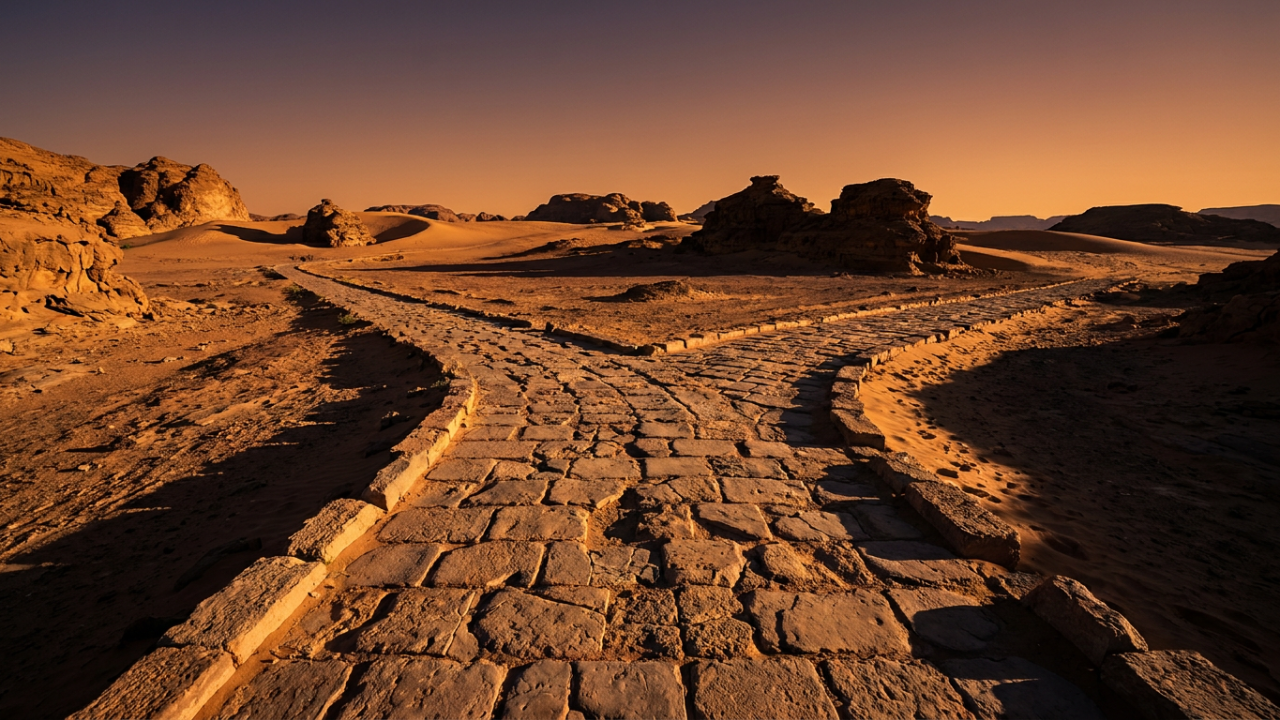
This article is part of the Series: Know What You Believe and Why - Part 2 - A Wolf in Sheep's Clothing
The Conversation Most Christians Avoid
Islam is the second-largest religion on earth. There are approximately 1.8 billion Muslims worldwide — roughly 24 percent of the global population. It is the fastest-growing major religion by birth rate and conversion. In the United States, the Muslim population has roughly doubled since 2000 and is projected to surpass the Jewish population as the second-largest non-Christian religious group within the next decade.
This is not a distant theological abstraction. It is the religious reality of the world your children are growing up in. And most Christians are completely unprepared to engage it — not because they are unintelligent, but because they have never been given the tools.
This three-part series is those tools. Part 1 covers the foundational divergence — the Abraham fork, where the roads between Christianity and Islam split and why that split matters for everything that follows. Part 2 covers what the Quran actually teaches versus what Western audiences are typically told. Part 3 covers the assimilation question — what the data shows about Islam in Western societies and what Christians need to understand about it.
We are going to be honest. We are going to be factual. And we are going to be clear.
The Common Ground
Start here, because it matters: Christianity and Islam share more common ground than most people on either side acknowledge.
Both are monotheistic. Both trace their spiritual lineage to Abraham. Both revere Moses and the Hebrew prophets. Both believe in a final judgment, in heaven and hell, in the importance of prayer and moral living. Both regard Jesus as a significant figure — though, as we will see, the disagreement about who Jesus is turns out to be the most important disagreement in the history of religion.
Muslims regard Christians and Jews as Ahl al-Kitab — People of the Book. The Quran acknowledges the Torah and the Gospels as divine revelation, though it teaches that they have been corrupted over time and that the Quran is the final, uncorrupted revelation. This shared heritage is real and worth acknowledging. It is also the reason the disagreements are so sharp. The closer two systems are, the more precisely you have to identify where they diverge.
Abraham and the Fork in the Road
The divergence between Christianity and Islam begins with Abraham — specifically with the question of which son God's covenant ran through.
The Hebrew Bible is unambiguous: God's covenant with Abraham was confirmed through Isaac, the son of Sarah. Genesis 17:19 records God saying: "Your wife Sarah will bear you a son, and you will call him Isaac. I will establish my covenant with him as an everlasting covenant for his descendants after him." Ishmael, Abraham's son by Hagar, was blessed but was not the covenant son. The line of promise ran through Isaac to Jacob to the twelve tribes of Israel — and ultimately to Jesus Christ.
Islamic tradition tells a different story. In the Islamic account, it was Ishmael — not Isaac — who was the son Abraham nearly sacrificed on the mountain. The covenant and the blessing ran through Ishmael, the ancestor of the Arab peoples, and ultimately to Muhammad, the final prophet. The Hebrew Bible's account, in the Islamic view, has been corrupted by Jewish scribes who substituted Isaac for Ishmael to claim the covenant for themselves.
This is the fork. And it is not a minor disagreement about ancient genealogy. It is a disagreement about the entire structure of divine revelation — about which line God chose, which scriptures are reliable, and which prophet is final.
If the Hebrew Bible is accurate — and the manuscript evidence, which we will cover in Track 3, is overwhelming — then the Islamic account of the Abraham story is a revision made six centuries after the fact by a tradition that had a theological interest in the revision. If the Islamic account is accurate, then the entire Hebrew Bible has been systematically corrupted, and the God of the Bible is not the God of the Quran.
Both cannot be true. The fork is real.
Who Is Jesus?
The most important disagreement between Christianity and Islam is not about Abraham. It is about Jesus.
Islam regards Jesus — Isa in Arabic — as one of the greatest prophets. The Quran affirms the virgin birth. It affirms that Jesus performed miracles. It affirms that Jesus was the Messiah. It even affirms that Jesus was taken up to God. On these points, the Quran says more about Jesus than it says about Muhammad.
But the Quran explicitly and emphatically denies two things: the crucifixion and the divinity of Christ.
Surah 4:157 states: "They did not kill him, nor did they crucify him, but it was made to appear so to them." In Islamic theology, Jesus was not crucified. Someone else — most traditions say Judas — was made to look like Jesus and crucified in his place. Jesus was taken up to heaven alive.
Surah 5:72 states: "They have certainly disbelieved who say, 'Allah is the Messiah, the son of Mary.'" The claim that Jesus is God — the central claim of Christianity — is, in the Quran, the definition of shirk: the unforgivable sin of associating partners with God.
This is not a nuanced theological difference. The crucifixion is the hinge of Christian faith. Paul wrote in 1 Corinthians 15:17: "If Christ has not been raised, your faith is futile; you are still in your sins." If Jesus was not crucified, He was not raised. If He was not raised, there is no gospel. The Islamic denial of the crucifixion is not a variation on Christianity. It is a denial of the event that Christianity stands or falls on.
Muhammad and the Prophetic Claim
Islam's central claim is that Muhammad — born in Mecca around 570 AD — was the final prophet of God, the seal of the prophets, whose revelation supersedes all previous revelation. The Quran, in the Islamic view, is the direct, uncorrupted word of God as dictated to Muhammad through the angel Gabriel over approximately twenty-three years.
This claim requires examination. Not dismissal — examination.
Muhammad was a historical figure. His life is documented in the hadith — collections of his sayings and actions compiled by his followers — and in early Islamic biographies. The historical record is more extensive than the records of most ancient figures, and it includes details that are not always flattering to the prophetic image.
The Quran itself presents a specific challenge: it claims to be the final, perfect, uncorrupted revelation of God, superseding the Torah and the Gospels. But the Torah and the Gospels predate the Quran by centuries and millennia. The manuscript evidence for the Hebrew Bible and the New Testament — which we will cover in Track 3 — is extensive, early, and consistent. The claim that these texts were corrupted requires explaining how a corruption so thorough and so universal occurred without leaving any trace in the manuscript tradition.
It is a claim that has never been satisfactorily answered.
The Abrogation Problem
One more thing worth understanding before Part 2: the Quranic doctrine of abrogation — naskh in Arabic.
The Quran contains verses that appear to contradict each other. Some verses speak of peaceful coexistence with non-Muslims. Others command warfare against them. Islamic theology resolves these contradictions through abrogation: later verses supersede earlier ones. Surah 2:106 states: "We do not abrogate a verse or cause it to be forgotten except that We bring forth one better than it or similar to it."
The chronological order of Quranic revelation matters enormously for understanding what the Quran actually teaches. The earlier Meccan suras — revealed when Muhammad was a minority figure seeking tolerance — tend to be more peaceful. The later Medinan suras — revealed when Muhammad had military power and was consolidating political control — tend to be more confrontational toward non-Muslims.
When a Muslim quotes a peaceful verse from the Quran, it is worth knowing whether that verse has been abrogated by a later one. This is not a polemical trick. It is basic Quranic hermeneutics that every serious Muslim scholar acknowledges. Part 2 will go deeper on this.
Practical Applications
Know the Abraham fork. When a Muslim says that Islam, Christianity, and Judaism all worship the same God, the honest answer is: we share a common ancestor in Abraham, but we disagree fundamentally about which son the covenant ran through, which scriptures are reliable, and who Jesus is. That is not the same God. That is a shared starting point with a fundamental divergence.
Know the Jesus question cold. The Islamic Jesus — a prophet who was not crucified and is not divine — is not the Jesus of the New Testament. When the conversation comes to Jesus, know the difference and be able to articulate it clearly and respectfully.
Understand abrogation before quoting peaceful verses. If you are going to engage the Quran honestly, you need to understand that not all verses carry equal weight in Islamic jurisprudence. The doctrine of abrogation is real, it is acknowledged by Muslim scholars, and it matters for understanding what the Quran actually teaches about non-Muslims.
Approach Muslims as people, not as a theological problem. The 1.8 billion Muslims on earth are not a monolith. They are people — many of them sincere, many of them asking the same questions about meaning and purpose and God that every human being asks. The goal of understanding Islam is not to win arguments. It is to be equipped for honest, respectful, truth-telling conversations.
The Closing Charge
The fork in the road at Abraham is not a small divergence that closes up further down the path. It opens wider with every mile. Different covenant son. Different scriptures. Different Jesus. Different salvation. Different God.
That does not mean Muslims are beyond the reach of the gospel. It means the gospel they need is specific, clear, and grounded in the historical reality of a crucified and risen Christ — the event that Islam explicitly denies and that Christianity cannot survive without.
Know the fork. Know where it leads. Be ready to have the conversation.
Next week, Part 2 covers what the Quran actually says — and what you are typically not told about it.
Stop Drifting
You already know what happens if you do nothing.
A year from now,
you’ll either: