Lutheran — The Reformation That Changed Everything
May 24, 2026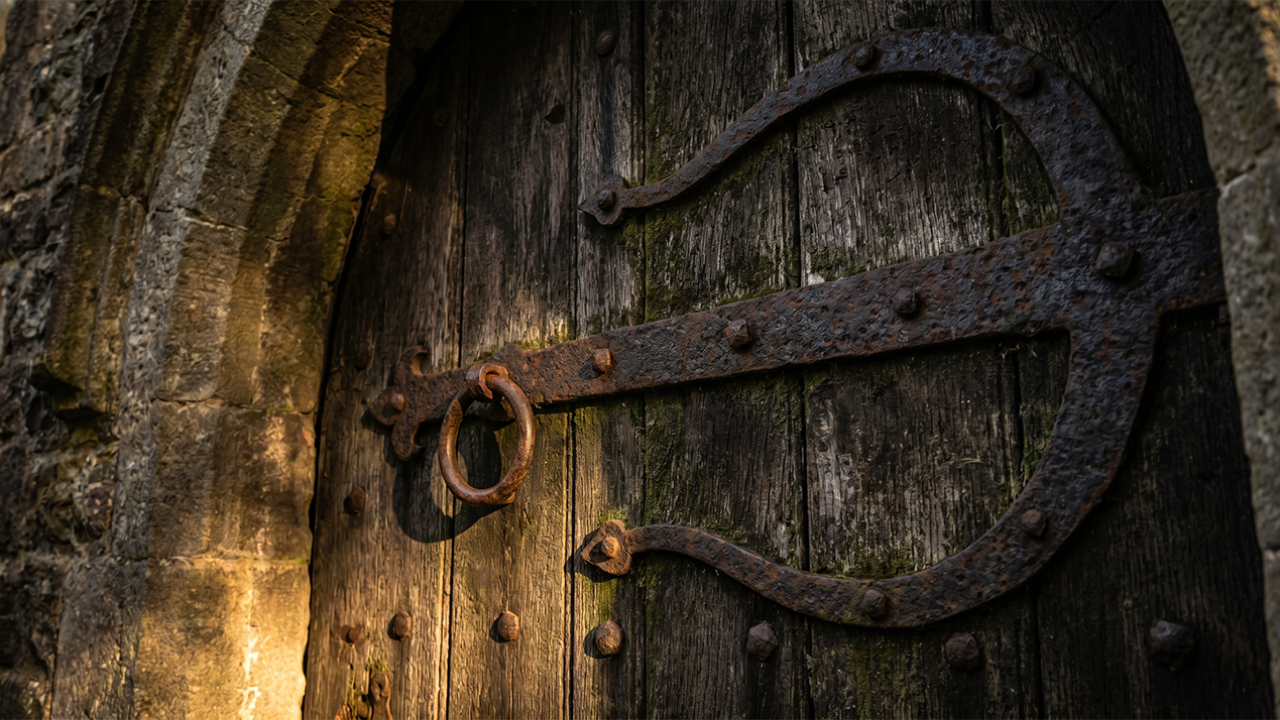
This is article 3 in the series: Know What You Believe and Why - KNOW YOUR ROOTS: A Plain-Language Guide to the Major Christian Traditions
One Man, One Door, One Argument That Split the World
On October 31, 1517, an Augustinian monk with a theology degree and a serious problem with institutional corruption walked up to the door of the Castle Church in Wittenberg, Germany, and nailed a piece of paper to it. The paper contained 95 arguments — theses — challenging the Catholic Church's practice of selling indulgences.
Martin Luther was not trying to start a new church. He was trying to fix the one he was in. He did not get what he wanted. What he got instead was a movement that permanently fractured Western Christianity, produced the first major Protestant tradition, and set in motion a chain of events that shaped the modern world.
You may not be Lutheran. You may never set foot in a Lutheran church. But if you are a Protestant Christian of any kind — Baptist, Methodist, non-denominational, whatever — you are standing on ground that Luther broke open. Understanding what he believed, what he fought for, and what the Lutheran tradition became is not optional background knowledge. It is the story of how your faith got to you.
The Problem Luther Could Not Ignore
To understand Luther, you have to understand what the Church looked like in 1517. The papacy was wealthy, politically powerful, and in the middle of an expensive building project — the construction of St. Peter's Basilica in Rome. To fund it, Pope Leo X authorized the sale of indulgences across Europe. An indulgence was essentially a certificate that reduced the time a soul spent in purgatory. You could buy one for yourself or for a deceased relative. The more you paid, the more time was reduced.
A Dominican friar named Johann Tetzel was traveling through Germany selling these certificates with a marketing slogan that has survived five centuries: "As soon as the coin in the coffer rings, the soul from purgatory springs."
Luther, who was a priest and a professor of theology, found this obscene. Not just ethically — theologically. He had been wrestling for years with the question of how a sinful man could stand before a holy God. He had tried everything the Church offered — confession, penance, fasting, pilgrimage. None of it gave him peace. Then he read Romans 1:17: "For in the gospel the righteousness of God is revealed — a righteousness that is by faith from first to last, just as it is written: 'The righteous will live by faith.'"
That verse broke something open in him. Righteousness was not something a man achieved. It was something God gave. By grace. Through faith. Not through indulgences, not through penance, not through any human effort or institutional transaction.
That was the argument. And once Luther made it publicly, there was no going back.
The Five Solas
The Reformation produced five Latin phrases — the Five Solas — that summarize what Luther and the reformers were fighting for. These are not Lutheran distinctives. They are the theological backbone of all Protestant Christianity. Every man who calls himself a Protestant Christian should know them cold.
Sola Scriptura — Scripture alone. The Bible is the final authority for Christian faith and practice. Not the Pope. Not church councils. Not tradition. Scripture.
Sola Fide — Faith alone. Justification — being declared righteous before God — comes through faith alone, not through works or sacraments or human merit.
Sola Gratia — Grace alone. Salvation is entirely God's initiative and God's gift. Man contributes nothing to his own salvation except the sin that made it necessary.
Solus Christus — Christ alone. Jesus Christ is the only mediator between God and man. Not Mary. Not the saints. Not the Pope. Christ alone.
Soli Deo Gloria — To God alone be the glory. The entire purpose of salvation, of the church, of the Christian life, is the glory of God — not the glory of any institution or individual.
These five phrases cost men their lives. They were not academic positions. They were declarations of war against a system that had accumulated enormous power by positioning itself between God and man. Luther's argument was simple and devastating: the system was not in the Bible.
What Lutherans Believe Today
The Lutheran tradition that emerged from the Reformation is theologically rich and, in some ways, more Catholic-adjacent than many Protestants realize. Luther did not want to throw out everything the Catholic Church had built. He wanted to reform it. What he could not justify from Scripture, he rejected. What he could, he kept.
Lutherans practice infant baptism and believe it is a genuine means of grace — that God works through the act of baptism to create faith. This is a significant difference from Baptist and many evangelical traditions, which hold that baptism is an outward sign of an inward faith that already exists.
Lutherans also hold a distinctive view of communion called the Real Presence. Luther rejected the Catholic doctrine of transubstantiation — the idea that the bread and wine literally become the body and blood of Christ. But he also rejected the purely symbolic view held by other reformers like Zwingli. Luther's position was that Christ is truly, physically present in, with, and under the bread and wine. Not instead of them. Alongside them.
These are not small differences. They reflect a deeper theological instinct in Lutheranism: that God works through physical means, that grace is not purely invisible and internal, that the material world is a legitimate vehicle for divine action.
Where Lutheranism Has Struggled
The Lutheran tradition has not been without its failures. Luther himself made statements about Jewish people that were virulently antisemitic — statements that were later used by the Nazi regime to provide theological cover for atrocities. The Lutheran Church in Germany largely failed to resist Hitler. These are not footnotes. They are serious moral failures that the tradition has had to reckon with honestly.
Theologically, some branches of Lutheranism — particularly in Europe — have drifted significantly from the confessional standards Luther established. The Evangelical Lutheran Church in America, the largest Lutheran denomination in the United States, has moved in directions on sexuality and ordination that are difficult to reconcile with historic Lutheran theology. The Lutheran Church — Missouri Synod and the Wisconsin Evangelical Lutheran Synod have maintained more confessional positions.
This is a pattern you will see across every tradition in this series: the founding theological instincts are often sound, and the institutional drift over time is often significant. Knowing the difference between what a tradition was built on and what a particular denomination has become is essential for any man trying to navigate the Christian landscape honestly.
Practical Applications
Know the Five Solas. Memorize them. Understand them. Be able to explain why each one matters. They are not Lutheran property — they are the theological foundation of Protestant Christianity, and every Protestant man should be able to articulate them.
Understand the Reformation as your history. If you are a Protestant Christian, October 31, 1517 is part of your story. Luther's courage — standing before the Holy Roman Emperor at the Diet of Worms and saying "Here I stand, I can do no other" — is part of the inheritance you received. Know it.
Take the sacrament debates seriously. The disagreements between Lutheran, Reformed, and Baptist views of baptism and communion are not trivial. They reflect deep differences in how God works in the world and how grace is received. You do not have to agree with the Lutheran position, but you should understand it well enough to engage it honestly.
Watch for institutional drift in your own tradition. The Lutheran story is a warning as much as an inspiration. A tradition can be built on solid theological ground and still drift badly over generations. The antidote is always the same: go back to Scripture.
The Closing Charge
Luther was not a perfect man. He was stubborn, sometimes cruel, and capable of serious moral failure. He was also one of the most consequential figures in the history of the Christian faith — a man who looked at a corrupt institution, looked at the Word of God, and chose the Word.
That choice cost him everything he had built and everything he thought he wanted. It gave him something better: the freedom of a man who knows he stands before God on the righteousness of Christ alone, not on the merit of any institution or any effort of his own.
That is the Lutheran inheritance. And whether you are Lutheran or not, it belongs to you.
Stop Drifting
You already know what happens if you do nothing.
A year from now,
you’ll either: