The Mormon Mirage — Why the Book of Mormon Doesn't Hold Up
Sep 07, 2026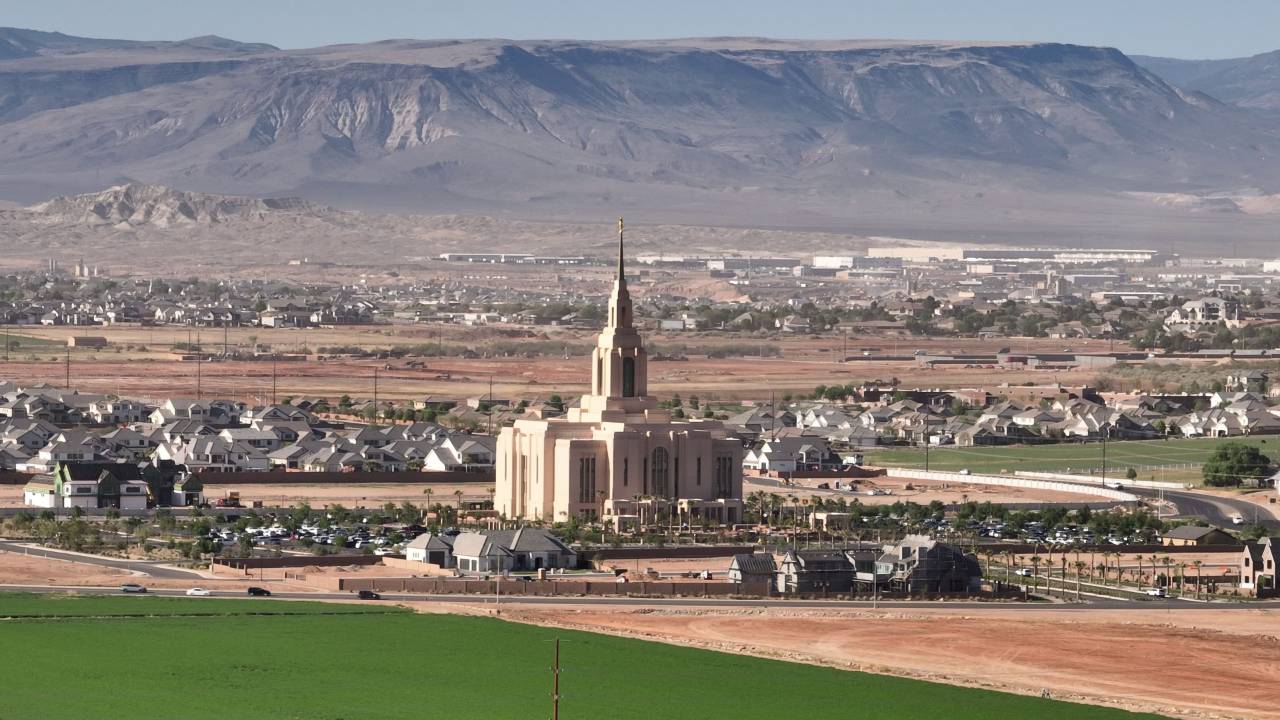
This article is part of the Series: Know What You Believe and Why - Part 2 - A Wolf in Sheep's Clothing
The Latter Day Saints
It was born in upstate New York in 1830. It claims to be the restoration of the original church that Jesus established — the one that was lost through centuries of apostasy and corruption. It has a prophet who receives ongoing divine revelation. It has its own scripture. It has temples that non-members cannot enter. It has sent missionaries to every country on earth, two by two, in white shirts and ties, carrying a book that its founder said was the most correct book on earth.
The Church of Jesus Christ of Latter-day Saints — the Mormons — is one of the fastest-growing religious organizations in the world, with roughly 17 million members. It is also, by the standard of historic Christian orthodoxy, not Christianity. It uses Christian language. It claims the name of Jesus Christ. It is not the same religion.
Understanding why requires looking honestly at the evidence — historical, archaeological, genetic, and textual. The evidence is not ambiguous. And every Christian man should know it.
Joseph Smith and the Golden Plates
The founding story of Mormonism is specific and verifiable. In 1820, a fourteen-year-old boy named Joseph Smith in Palmyra, New York, claimed to have a vision in which God the Father and Jesus Christ appeared to him and told him that all existing churches were wrong and that he had been chosen to restore the true church.
In 1823, Smith claimed that an angel named Moroni appeared to him and directed him to a hill called Cumorah, where golden plates were buried. Smith said he retrieved the plates in 1827 and translated them using a seer stone placed in a hat — a detail the LDS Church has acknowledged in recent years after long downplaying it. The translation became the Book of Mormon, published in 1830.
The Book of Mormon claims to be a record of ancient peoples who migrated from the Middle East to the Americas — the Jaredites around 2000 BC and the Lehites around 600 BC. These peoples, according to the text, built cities, fought wars, raised crops, and were visited by the resurrected Jesus Christ after His ascension.
This is a specific historical claim. It is testable. And it has been tested.
The Archaeological Problem
The Smithsonian Institution — the largest museum and research complex in the world — has issued an official statement on the Book of Mormon. It reads, in part: "The Smithsonian Institution has never used the Book of Mormon in any way as a scientific guide. Smithsonian archaeologists see no direct connection between the archaeology of the New World and the subject matter of the book."
The National Geographic Society has issued a similar statement.
The Book of Mormon describes a civilization that used steel, horses, chariots, wheat, barley, elephants, and silk in pre-Columbian America. Archaeological evidence for none of these things in the relevant time periods and locations exists. Horses were extinct in the Americas by approximately 10,000 BC and were not reintroduced until the Spanish arrived in the 16th century. Steel was not produced in pre-Columbian America. Chariots have never been found. Wheat and barley were not cultivated in Mesoamerica before European contact.
These are not minor details. They are central to the narrative of the Book of Mormon. A text that describes a civilization using technologies and animals that did not exist in the time and place it describes is not a historical record. It is a 19th century document written by someone who did not know what pre-Columbian America actually looked like.
The DNA Problem
The Book of Mormon describes the Lehites — a family from Jerusalem — as the primary ancestors of the indigenous peoples of the Americas. For most of its history, the LDS Church taught this explicitly: Native Americans were descendants of Israelites.
DNA evidence has made this position untenable. The genetic ancestry of indigenous Americans traces overwhelmingly to migrations from Northeast Asia across the Bering land bridge — not to the Middle East. There is no detectable Israelite genetic signature in any indigenous American population.
The LDS Church has quietly revised its position. The introduction to the Book of Mormon, which previously described the Lehites as "the principal ancestors of the American Indians," was changed in 2006 to say they were "among the ancestors." This is a significant theological retreat driven entirely by scientific evidence — evidence that the Book of Mormon's historical claims cannot survive.
The Theological Departures
Beyond the historical problems, Mormon theology departs from Christianity at the most fundamental level.
God was once a man. Joseph Smith taught explicitly: "God himself was once as we are now, and is an exalted man." The LDS doctrine of eternal progression holds that God the Father was once a mortal man who progressed to godhood. This is not a Christian doctrine. It is not a variation on a Christian doctrine. It is a direct contradiction of the God revealed in Scripture — the eternal, self-existent, uncreated Creator of all things.
Men can become gods. The corollary to God's progression is human progression. The LDS teaching, summarized in the famous couplet attributed to Lorenzo Snow, is: "As man now is, God once was; as God now is, man may become." Faithful Mormon men, through temple ordinances and righteous living, can progress to become gods of their own worlds. This is the explicit goal of Mormon exaltation.
There are many gods. Mormon theology is polytheistic. There are innumerable gods — each one a formerly mortal being who progressed to godhood. The God of this world is one among many. This is not monotheism with a different emphasis. It is a different religion.
Jesus and Lucifer are brothers. In Mormon theology, Jesus Christ and Lucifer are both spirit children of Heavenly Father — brothers in the pre-mortal existence who competed for the role of Savior. Jesus was chosen. Lucifer rebelled. This is not a Christian doctrine. It is not a variation on a Christian doctrine.
Salvation requires temple ordinances. Mormon salvation — specifically exaltation, the highest degree of glory — requires temple marriage, baptism for the dead, and other ordinances that can only be performed in LDS temples. Grace is necessary but not sufficient. The ordinances are required.
The Translation Problems
The Book of Mormon is not the only LDS scripture with serious credibility problems. Joseph Smith also produced the Book of Abraham — a text he claimed to have translated from Egyptian papyri purchased in 1835. Smith said the papyri contained writings of the patriarch Abraham.
In 1966, the original papyri were rediscovered in the Metropolitan Museum of Art in New York. Egyptologists — including LDS scholars — examined them. The papyri are standard Egyptian funerary documents — the Book of Breathings, a common burial text. They have nothing to do with Abraham. Smith's "translation" bears no relationship to what the papyri actually say.
The LDS Church has acknowledged this in its Gospel Topics Essays — a series of official documents addressing difficult historical and theological questions. The explanation offered is that Smith's translation was a "revelation" rather than a literal translation. This is a significant revision of what Smith himself claimed and what the church taught for over a century.
Practical Applications
Know the archaeological argument. The Smithsonian statement is publicly available. The absence of horses, steel, chariots, and wheat in pre-Columbian America is documented. You do not need a theology degree to make this argument — you need to know the facts and be willing to state them clearly.
Know the DNA argument. The genetic evidence for the origins of indigenous Americans is settled science. The LDS Church's own revision of the Book of Mormon introduction is an acknowledgment that the original historical claim cannot be sustained.
Distinguish Mormon language from Christian language. When a Mormon missionary says "I believe in Jesus Christ," they mean something different from what you mean. Their Jesus is the spirit brother of Lucifer, the firstborn of Heavenly Father's spirit children, not the eternal God of Christian orthodoxy. The same words do not mean the same things. Know the difference.
Approach with compassion. Many Mormons are sincere, moral, family-oriented people who have been raised in a system they have never been given the tools to examine critically. The Gospel Topics Essays — the LDS Church's own acknowledgments of historical problems — have caused a significant faith crisis among members who encounter them for the first time. These are people in the middle of a genuine reckoning. Meet them there.
The Closing Charge
The Book of Mormon claims to be the most correct book on earth. The earth itself, its soil, its DNA, its archaeological record, says otherwise. The papyri that Joseph Smith claimed to translate say otherwise. The historical record of Smith's own life and teachings says otherwise.
This is not a matter of faith versus evidence. It is a matter of a specific set of historical claims that can be examined and have been examined, by archaeologists, geneticists, Egyptologists, and historians, and found to be without foundation.
There is also a more recent chapter worth knowing. In 2018, church president Russell M. Nelson announced that the nickname Mormon was to be dropped entirely, replaced by the full name, The Church of Jesus Christ of Latter-day Saints, or simply "the restored church of Jesus Christ." Missionaries stopped calling themselves Mormon missionaries. The Mormon Tabernacle Choir became the Tabernacle Choir at Temple Square. Nelson framed the change as a matter of revelation and obedience. It also happened to retire a name carrying a century and a half of baggage: polygamy, Warren Jeffs, reality television, and a founder who took plural wives as young as fourteen. A name change does not undo a history. It manages one. The theological claims addressed in this article remain exactly as true, or exactly as false, as they were before anyone changed the label on the door.
One more fact worth knowing before you close this out. The church that asks members to tithe ten percent of their income sits on a financial base that would surprise most of those members. A 2019 whistleblower complaint filed by a former employee of Ensign Peak Advisors, the church's investment arm, alleged the fund held approximately 100 billion dollars in reserve, money the complaint said had gone largely unused for the charitable and missionary purposes members were told their tithing supported. The church is also among the largest private landowners in the United States through agricultural holdings running into the hundreds of thousands of acres. None of that settles a theological question. It is simply worth knowing.
The Mormon mirage is compelling from a distance. Up close, in the light of evidence, it does not hold. Every Christian man should know why, not to win arguments, but because the people knocking on doors in white shirts deserve an honest conversation about what the evidence actually shows.
Stop Drifting
You already know what happens if you do nothing.
A year from now,
you’ll either: