The Discipline That Feels Like Punishment Isn't Punishment At All
Aug 19, 2026
I've never met a man who signed up for pain and called it a good decision the same day. Nobody wakes up excited about the workout that's going to leave his legs shaking, or the early alarm that's going to cut his sleep short, or the hard conversation he's been avoiding with his wife. We don't volunteer for pain. We tolerate it, usually with some resentment, and we wait for it to be over. That's exactly the trap most men fall into with Hebrews 12:11, and it's worth slowing down on, because the verse says something most of us skip right past. "No discipline seems pleasant at the time, but painful. Later on, however, it produces a harvest of righteousness and peace for those who have been trained by it." Read that again. It doesn't say discipline is punishment that happens to be useful. It says discipline is training, and training is supposed to hurt while it's happening.
The Word Behind the Word
The Greek word translated "discipline" in this verse is paideia. It's not the word for punishment. It's the word for the whole process of raising and shaping a child, education in the fullest sense, correction included, but correction aimed at maturity, not correction for its own sake. A father who disciplines his son isn't looking for an excuse to make the kid suffer. He's trying to produce a man who can handle real weight later. That distinction changes everything about how a man should experience a hard season. If you're walking through something difficult right now, the question worth asking isn't "why is God punishing me." It's "what is God training me for." Those are two completely different postures, and only one of them will keep you in the fight when things get hard.
Nehemiah Didn't Wait to Feel Ready
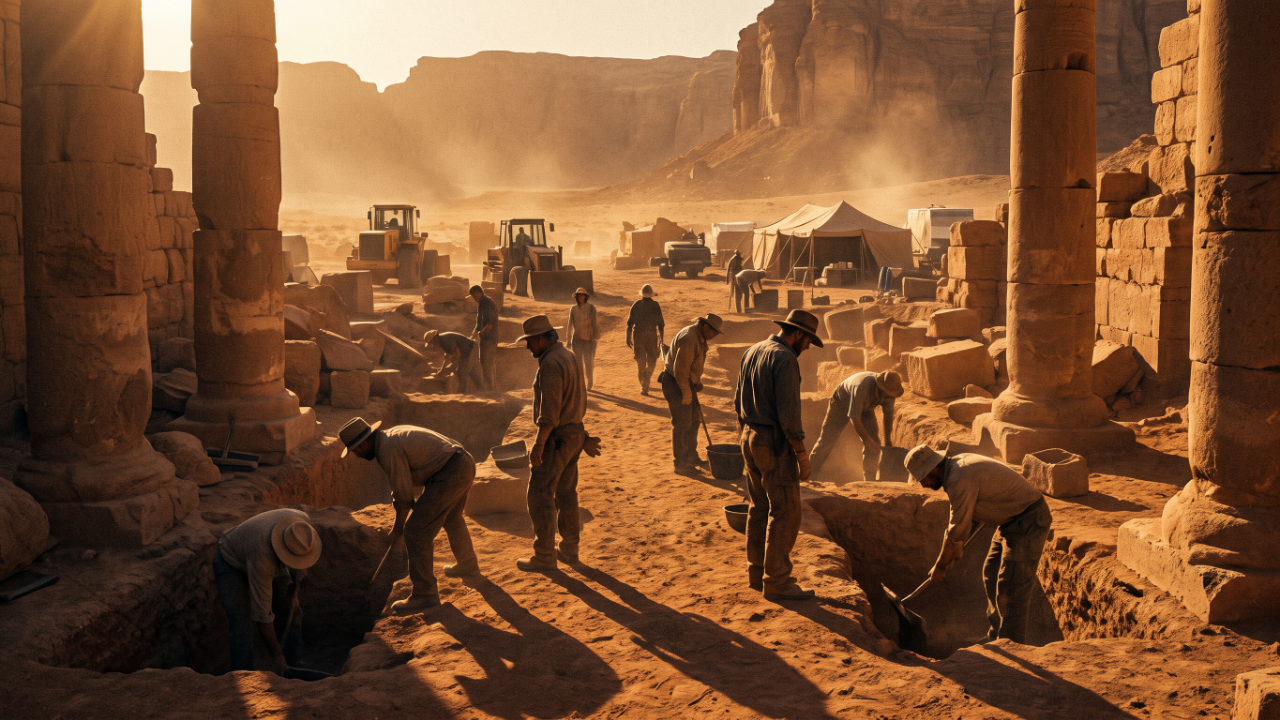
Look at Nehemiah for a second. He inherited a city with broken walls, a demoralized population, and enemies actively working against the rebuild. He didn't wait until conditions were comfortable. He organized the work, assigned every family a section of wall, and kept building while men held a sword in one hand and a trowel in the other. That's paideia in action, training under pressure, discipline that hurt in the moment and produced a rebuilt city later. Nehemiah 4 says the people worked with one hand and held a weapon with the other, and nobody took their clothes off, not even for washing, the whole time the wall went up. That's not a comfortable season. That's a trained season. The wall got rebuilt because the discipline didn't stop when it got hard.
David's Training Ground Was a Cave
Before David wore a crown, he spent years in caves running from Saul, a season that looked like nothing but loss from the outside. No throne, no army, no comfort, just years of hiding and waiting. But look at what came out of that season. Half the Psalms carry the fingerprints of a man who learned to trust God in the dark before he ever ruled in the light. David wasn't being punished in the cave. He was being trained. The discipline of those years, the patience, the dependence, the refusal to take the throne by force when he had the chance, all of that shaped the king he eventually became.
Paul Fought His Own Body on Purpose
Paul puts it even more directly in 1 Corinthians 9:27. "I discipline my body and keep it under control, so that after I have preached to others, I myself will not be disqualified." That word "discipline" there is hupopiazo, literally to strike under the eye, boxing language. Paul is describing an active fight against his own impulses, not a passive hope things would work out. He trained his body the way a fighter trains, on purpose, with resistance, expecting it to be uncomfortable.
Practical Applications
So what does this mean for a man in a late summer reset, staring at six weeks of drift and wondering how he let it happen? First, stop waiting for the discipline to feel good before you trust it. It won't, not at first. Second, name the specific area where you've gone soft and treat it like training, not punishment. Third, expect the middle of the reset to be the hardest part, because that's where most men quit, right before the harvest they were actually working toward. Fourth, remember the harvest in Hebrews 12:11 isn't just better habits. It's righteousness and peace, a settled soul, not just a fuller calendar.
Closing Charge
Nehemiah didn't put the sword down because the work got hard. David didn't leave the cave early because it was uncomfortable. Paul didn't stop training his body just because it fought back. None of them treated discipline as punishment. They treated it as the price of the harvest, and they paid it. That's the invitation this week. Not motivation. Not a fresh start. Just the same old training that's always produced the same old harvest for every man willing to stay in it.
If you want daily structure that builds this kind of discipline instead of relying on a burst of motivation that fades by September, FORGED:365 was built for exactly that, Scripture and discipline, every day, so training becomes a rhythm instead of a one-time reset.
Stop Drifting
You already know what happens if you do nothing.
A year from now,
you’ll either: