The Book That Survived Everything
Oct 11, 2026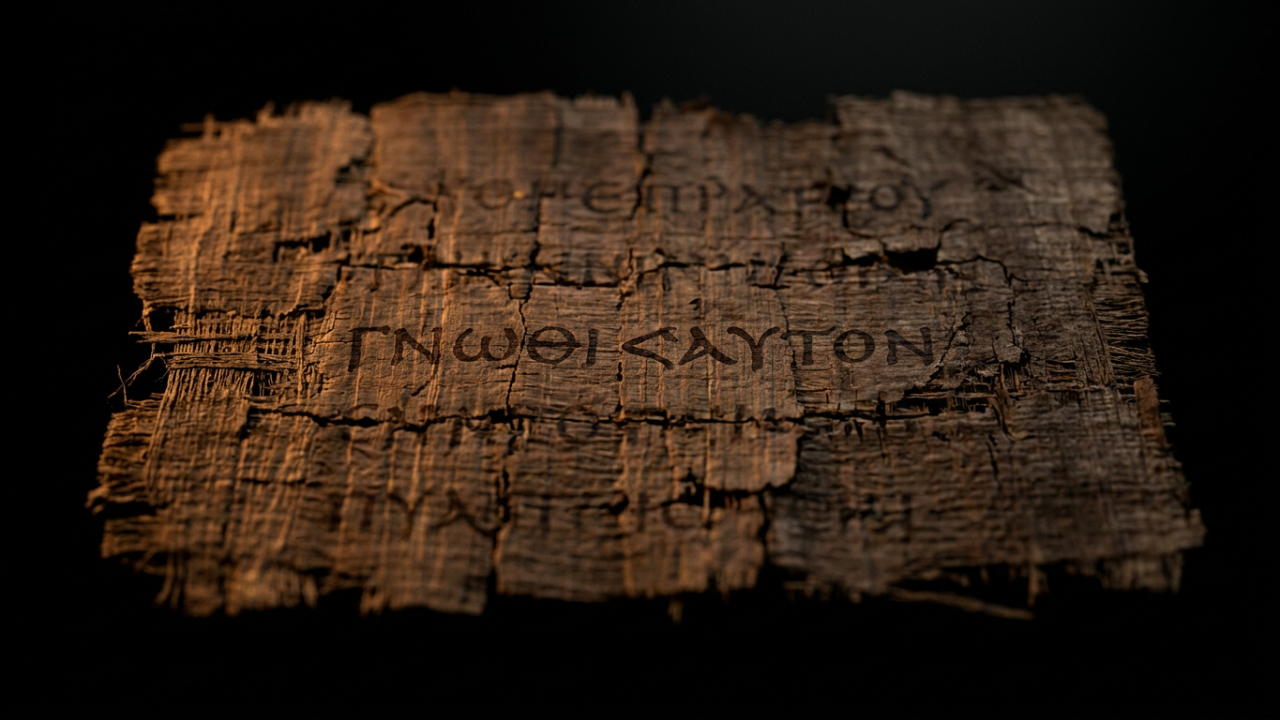
The Most Attacked Book in History
No document in human history has been subjected to more sustained, more sophisticated, or more determined attack than the Bible. Emperors have burned it. Philosophers have dismissed it. Scholars have dissected it. Governments have banned it. Critics have spent careers trying to demonstrate that it is historically unreliable, textually corrupted, internally contradictory, or simply invented.
It is still here.
Not just here — it is the most widely distributed, most translated, most read document in human history. And the manuscript evidence that underlies it is stronger than the manuscript evidence for any other ancient text by a margin that is not close.
This is not a faith claim. It is a fact of textual history. And every Christian man should know it well enough to state it clearly when someone tells him the Bible has been changed, corrupted, or cannot be trusted.
How Ancient Documents Are Evaluated
Before making the case for the Bible specifically, it helps to understand how historians evaluate the reliability of any ancient document. Two factors matter most: the number of surviving manuscripts and the time gap between the original writing and the earliest surviving copy.
More manuscripts means more data points for comparison — more ability to identify copying errors, interpolations, or changes over time. A smaller time gap means less opportunity for corruption between the original and what we have.
By both measures, the New Testament is in a category by itself among ancient documents.
The New Testament Manuscript Evidence
There are approximately 5,800 surviving Greek manuscripts of the New Testament — ranging from small fragments to complete codices. When you add manuscripts in other ancient languages — Latin, Coptic, Syriac, Armenian, Georgian — the total exceeds 24,000.
For comparison: the Iliad of Homer, the second most well-attested ancient text, survives in approximately 1,900 manuscripts. The works of Julius Caesar survive in approximately 10 manuscripts. The works of Plato survive in approximately 7. Tacitus, one of the most important Roman historians, survives in 2 manuscripts for his major works.
No historian dismisses Caesar or Plato or Tacitus on the grounds that we cannot trust ancient manuscripts. The New Testament has more manuscript support than all of them combined — by orders of magnitude.
The time gap is equally significant. The earliest surviving fragment of the New Testament — the John Rylands Papyrus, containing a portion of John 18 — dates to approximately 125 AD, within a generation of the original writing. Several other papyri date to the late second and early third centuries. Complete New Testament codices — the Codex Sinaiticus and Codex Vaticanus — date to the fourth century.
For Caesar's Gallic Wars, the gap between original writing and earliest surviving manuscript is approximately 900 years. For Plato, approximately 1,200 years. For the New Testament, the gap is measured in decades for the earliest fragments and a few centuries for complete manuscripts.
If the manuscript gap disqualifies the New Testament, it disqualifies every ancient document we have. No serious historian applies that standard — because no serious historian can afford to.
The Old Testament: The Dead Sea Scrolls
The manuscript evidence for the Old Testament received its most dramatic confirmation in 1947, when a Bedouin shepherd threw a rock into a cave near the Dead Sea and heard pottery break. What he had found — and what subsequent excavations revealed — was the largest and most significant archaeological discovery in the history of biblical scholarship.
The Dead Sea Scrolls, discovered in the caves of Qumran between 1947 and 1956, contained manuscripts of every book of the Hebrew Bible except Esther, dating to between 250 BC and 68 AD. The Isaiah Scroll — a complete copy of the book of Isaiah — dates to approximately 125 BC, making it roughly a thousand years older than the previously oldest known Hebrew manuscript of Isaiah.
The comparison between the Dead Sea Scrolls and the Masoretic Text — the Hebrew Bible that had been the standard for Jewish and Christian scholarship — revealed something remarkable: the texts were virtually identical. After a thousand years of copying, the scribes had preserved the text with extraordinary accuracy. The differences that existed were minor — spelling variations, occasional word substitutions — none of which affected the meaning of the text in any significant way.
The claim that the Bible has been changed and corrupted over centuries of transmission is not supported by the manuscript evidence. The Dead Sea Scrolls demonstrate that the text of the Hebrew Bible was being transmitted with remarkable fidelity more than two thousand years ago.
What About the Variants?
Critics of the Bible sometimes point to the existence of textual variants — differences between manuscripts — as evidence that the text cannot be trusted. Bart Ehrman, a New Testament scholar and prominent skeptic, has claimed there are 400,000 variants in the New Testament manuscripts.
This number is accurate. What Ehrman does not always emphasize — and what his critics have pointed out repeatedly — is what those variants actually are.
The vast majority of textual variants are spelling differences, word order variations, and minor scribal errors that are immediately obvious and have no effect on meaning. A significant portion are cases where a scribe added a clarifying word or phrase that other manuscripts do not have. Scholars estimate that variants that are both meaningful and viable — that actually affect the meaning of the text and have a reasonable claim to being original — represent less than one percent of the total text, and none of them affect any core Christian doctrine.
The existence of variants is actually evidence for the reliability of the transmission process, not against it. Because we have so many manuscripts, we can compare them, identify variants, and reconstruct the original text with a high degree of confidence. A tradition with only one manuscript would give us no ability to check for errors at all.
The Canon Question
A related objection is the canon question: who decided which books belonged in the Bible, and why should we trust their judgment?
The short answer is that the canon was not invented at the Council of Nicaea in 325 AD — a claim that has been popularized by Dan Brown's The Da Vinci Code and has no basis in historical fact. The Council of Nicaea did not discuss the canon. The canon of the New Testament was largely settled by consensus among Christian communities well before Nicaea, based on three criteria: apostolic authorship or connection, consistency with established Christian teaching, and widespread use across the church.
The formal canonical lists that emerged in the fourth century — Athanasius's Easter Letter of 367 AD is the earliest list that matches the current New Testament exactly — were not creating the canon. They were recognizing what the church had already been using for generations.
The books that were excluded — the Gnostic gospels, the Gospel of Thomas, the Gospel of Judas — were excluded because they were late, because they contradicted established apostolic teaching, and because they were not in widespread use among Christian communities. They were not suppressed by a conspiracy. They were evaluated and found wanting by the same criteria that the accepted books met.
Practical Applications
Know the manuscript numbers. 5,800 Greek New Testament manuscripts. 24,000 total. The Iliad has 1,900. Caesar has 10. Plato has 7. These numbers are not hard to remember and they are devastating to the claim that the Bible cannot be trusted on manuscript grounds.
Know the Dead Sea Scrolls argument. The discovery of manuscripts a thousand years older than the previously known copies, and the near-perfect consistency with the received text, is one of the most powerful confirmations of biblical reliability in the history of scholarship. Know it.
Know the variant argument. Yes, there are 400,000 variants. No, they do not affect any core doctrine. Yes, the existence of variants is actually evidence for the reliability of the transmission process. Know how to make this argument clearly.
Read Ehrman and his critics. Bart Ehrman's Misquoting Jesus is the most widely read popular-level attack on New Testament reliability. Read it. Then read Daniel Wallace's response, or Craig Blomberg's Can We Still Believe the Bible? Know the argument from both sides.
The Closing Charge
The Bible has survived everything. Imperial persecution. Philosophical attack. Higher criticism. The printing press. The internet. Two thousand years of determined effort to demonstrate that it is unreliable, corrupted, or invented.
It is still here. The manuscripts are still here. The Dead Sea Scrolls are still here. The John Rylands Papyrus is still here. The evidence is still here.
A man who knows this evidence does not have to defend the Bible with feelings and tradition. He can defend it with facts — the same kind of facts that historians use to evaluate every other ancient document, applied consistently and honestly to the most documented text in human history.
Know the evidence. Own it. The book that survived everything deserves a man who knows why.
Stop Drifting
You already know what happens if you do nothing.
A year from now,
you’ll either: